

To mitigate the inherent seasonality of ice pops, Skippi is actively diversifying its portfolio using the same efficient General Trade network. They have introduced non-frozen FMCG snacks like Cream Rolls and a four-flavor line of Corn Sticks. This strategy stabilizes year-round revenue streams and maximizes the utilization of their low-cost distribution channels, ensuring sustained momentum toward the ₹100 Crore target.
How Skippi Mastered Supply Chain & Digital Marketing to Hit ₹20 Cr+ Revenue
The Ice Pop Revolution
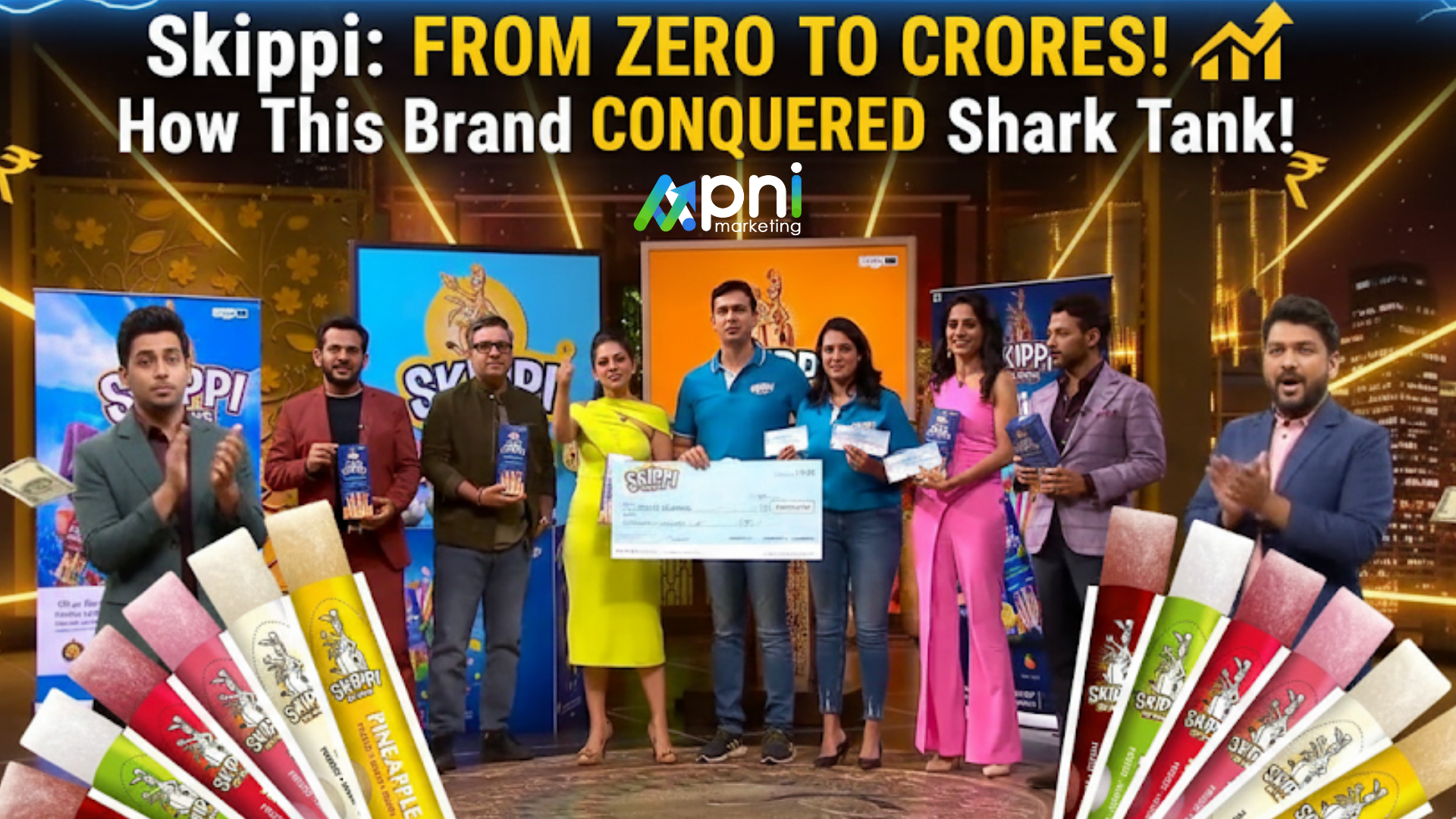
Skippi Ice Pops—founded by Ravi and Anuja Kabra—made history on Shark Tank India Season 1 by securing the “All-Shark Deal.” However, the true story of their rise to ₹20.2 Crore in FY24 revenue is rooted in a strategic innovation far more powerful than TV exposure: patented, shelf-stable technology.
I. The Brand Story: Selling Nostalgia and Purity to the D2C Market
Skippi’s core challenge was overcoming the fundamental trust barrier associated with traditional, unhygienic street popsicles. Their digital marketing strategy was meticulously crafted to solve this trust issue and build immediate brand familiarity.
The Dual Power of Nostalgia and Purity
Skippi targeted Millennials and young parents (Ages 28–40)—the buyers with the disposable income and the nostalgic memory.
Emotional Connection: Digital campaigns focused heavily on 90s Aesthetics, leveraging throwbacks, retro colors, and childhood scenarios. This use of Nostalgia Marketing drove organic sharing (User-Generated Content or UGC) as parents tagged friends, creating free, high-intent traffic.
- Quality Guarantee: Every piece of digital content, from the website (
skippi.in) to social posts, emphasized their non-negotiable commitment: 100% natural colors, natural flavors, RO water, and preservative-free certification. This directly addressed the health and hygiene concerns of their primary consumer—the modern parent. - Flavor Strategy as Brand Loyalty: The brand uses its 15 SKUs to blend global favorites (Cola, Bubblegum) with deep Indian flavor roots, such as Kala Khatta, Jaljeera, and Aam Panna. This strategy leverages familiar regional tastes to foster immediate brand loyalty in a price-sensitive market.
II. The Operational Moat: Why Skippi is Fundamentally Different
The real reason Skippi secured an “All-Shark Deal” and continues to achieve aggressive scale is a structural, logistical innovation that fundamentally changes the economics of frozen FMCG distribution in India.
Patented Shelf-Stable Technology: Eliminating the Cold Chain
Zero Cold-Chain Requirement: This bypasses the need for costly, unreliable, and capital-intensive refrigeration units across the entire supply chain, saving vast amounts on logistics.
General Trade Dominance: This allows Skippi to stock the product in over 10,000+ outlets, especially small kirana stores and General Trade counters that cannot afford a freezer. This channel contributes an estimated 70% to 80% of their total revenue, guaranteeing mass-market penetration that traditional ice cream rivals (Amul, Kwality Walls) cannot easily match in Tier 2 and Tier 3 cities.
Maximizing Profitability: This depressed distribution cost is the structural basis for management’s ambitious goal of achieving a 15% to 18% net profit margin, a figure that is remarkably high for the Food and Beverage sector.
III. Strategic Scaling: Funding and Omnichannel Excellence
1. The Funding Roadmap
The initial Shark Tank investment of ₹1.2 Crore for 18% equity immediately led to a 40X revenue increase. Building on this momentum, Skippi recently secured ₹10 Crore in Pre-Series A funding to accelerate scale.
The allocation of this capital reveals a clear strategy for hyper-growth:
40% dedicated to Branding and Marketing: Investing heavily in market visibility and converting awareness into deep penetration.
30% allocated to Working Capital: Ensuring high inventory availability to satisfy General Trade distributors and maintain robust shelf presence across the country.
20% for New Product Development (NPD): Essential for continuous product innovation and quality control.
2. Strategic Diversification for Year-Round Growth
3. E-commerce and Quick Commerce (Q-commerce) as a Data Moat
Real-time Market Testing: Skippi utilizes its D2C website and Q-commerce channels to sell new, limited-edition products (like the desi flavor range) first. This provides instant consumer feedback and de-risks major inventory commitments before launching nationally via General Trade.
Global Expansion Validation: The brand is already exporting to over 10 countries, with an aggressive plan to target high-value markets like the US and the Middle East, validated by its HALAL and USFDA certifications.
IV. Key Digital Takeaways for D2C Founders in Delhi NCR
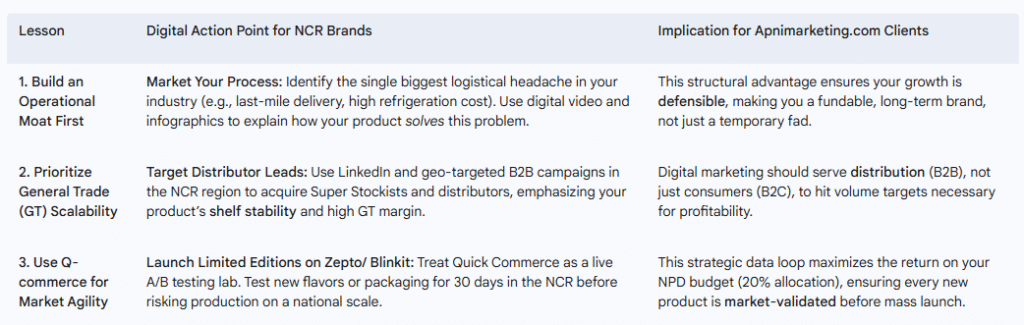
The Skippi story is a masterclass in combining an operational moat with smart digital strategy. These are the actionable lessons for Apnimarketing.com’s clients in the competitive Faridabad and Delhi NCR market:
Skippi Ice Pops secured the historic All-Shark Deal—the first of its kind on the show—receiving ₹1.2 Crore in funding for 18% equity. This investment served as a massive marketing and financial catalyst, driving a reported 40X revenue increase immediately after the episode aired. Apnimarketing utilizes these financial benchmarks to advise clients on realistic growth capital requirements post-exposure and media visibility.
Skippi's primary competitive advantage is its patented, shelf-stable technology. The product is manufactured and distributed in liquid form at ambient temperature, which fundamentally eliminates the need for a costly cold chain. This structural advantage drastically reduces logistics costs (by an estimated 70-80%) and allows them to achieve deep penetration into the high-volume General Trade (kirana) market across India. Apnimarketing's core mission is helping clients in the NCR region identify and market their own unique structural or operational moats.
Skippi achieves high sales volume by dominating the General Trade channel (70-80% of revenue), which is only possible due to their low-cost distribution model. Their financial success is tied to achieving high volume to support their ambitious goal of reaching a 15% to 18% net profit margin, a figure that validates the economic efficiency of the shelf-stable technology. Apni marketing helps D2C brands translate these volume-based strategies into measurable, local retail penetration plans across the Delhi NCR.
Skippi used a targeted Nostalgia Marketing strategy, appealing to millennial parents (the buyers) with 90s Aesthetics and throwbacks to drive organic sharing (UGC). Simultaneously, they used their D2C website and social channels to emphasize their Quality Guarantee (100% natural, preservative-free) to directly address consumer concerns about hygiene. At Apnimarketing, we specialize in fusing powerful emotional brand narratives with technical digital execution to overcome key market barriers.
Skippi uses Q-commerce as a strategic Real-time Market Testing lab. Instead of relying solely on it for volume, they use platforms like Swiggy Instamart and Blinkit to launch new, limited-edition flavors (like the desi range) first. This provides instant consumer feedback and de-risks their inventory commitments before launching products nationally via General Trade. Apnimarketing advises clients on integrating Q-commerce as a data moat for rapid, low-risk market validation.


